


3.5*0.5 stainless steel capillary tube


haracteristics and Physical Properties of 304 Capillary Tubes
- Material Composition: Primarily composed of 18% chromium and 8% nickel, with low carbon content, making it a classic austenitic stainless steel.
- Corrosion Resistance: Excellent resistance to oxidation, acids, alkalis, and other corrosive environments.
- High-Temperature Performance: Maintains good mechanical properties and oxidation resistance at high temperatures (up to 800°C).
- Low-Temperature Toughness: Retains ductility and strength even in cryogenic conditions.
- Mechanical Properties:
- Tensile Strength: ≥520 MPa
- Yield Strength: ≥205 MPa
- Elongation: ≥40%
- Non-Magnetic: Typically non-magnetic in the annealed state but may become slightly magnetic after cold working.
- Surface Finish: Smooth, polished surface with options for various finishes (e.g., matte, bright, or mirror polish).
- Formability & Weldability: Excellent formability and weldability, suitable for precision applications.
- Hygienic Properties: Easy to clean and sterilize, making it ideal for medical and food industries.
- Applications: Widely used in instrumentation, medical devices, chemical equipment, and precision engineering.
Key Standards: ASTM A213, A269 (U.S.), DIN 17458 (Europe), JIS G3446 (Japan).
Translation in English:
The above content is already in English, as requested. If you need further refinements or a different format, feel free to specify!
Chemical Composition and Applications of 304 Capillary Tubes
1. Chemical Composition (%)
| Element | Content (Typical) |
|---|---|
| Chromium (Cr) | 18.0–20.0 |
| Nickel (Ni) | 8.0–10.5 |
| Carbon (C) | ≤0.08 |
| Manganese (Mn) | ≤2.0 |
| Silicon (Si) | ≤1.0 |
| Phosphorus (P) | ≤0.045 |
| Sulfur (S) | ≤0.03 |
| Iron (Fe) | Balance |
2. Key Applications
- Medical Devices: Hypodermic needles, surgical instruments, catheter tubes.
- Laboratory Equipment: Precision fluid transfer, chromatography, and sensor components.
- Industrial Instrumentation: Pressure gauges, thermocouples, and hydraulic systems.
- Chemical Processing: Corrosion-resistant tubing for acids and solvents.
- Food & Beverage: Sanitary fluid transport and dairy processing.
- Automotive & Aerospace: Fuel injection systems and hydraulic lines.
- Electronics: Miniature tubing for cooling or gas delivery in semiconductors.
3. Key Standards
- ASTM A213/A269 (U.S.)
- DIN 17458 (Europe)
- JIS G3446 (Japan)
Note: 304 stainless steel capillary tubes are favored for their corrosion resistance, formability, and biocompatibility, making them versatile across industries. Let me know if you need additional details!
Related products
-
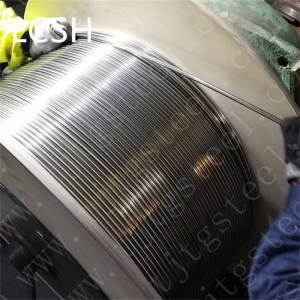
2205 Stainless Steel Coiled Tubing
2205 Stainless Steel Coiled Tubing of Chemical composition and physical properties PHYSICAL PROPERTIES Yield strength: ≥80,000 psi Tensile strength: ≥95,000 psi Maximum Hardness: 30C Rockwell CHEMICAL COMPOSITION-% Carbon ≤0.030 Manganese ≤2.00 Phosphorus ≤0.030 Sulfur ≤0.020 Silicon ≤1.00 Chromium 22.0-23.0 Nickel 4.5-6.5 Molybdenum 3.0-3.5 Specification: Stainless Steel Coiled tubing and Coiled line pipe Product types and specifications: O.D.: 19.05mm~25.4mm W.T :0.3mm-2mm Length:Max. 8...
-

Seamless stainless steel capillary tube
Sihe Stainless steel tubing in coils and on spools used for control lines, chemical injection lines, umbilicals as well as hydraulic and instrumentation systems. roducts: seamless stainless steel coil tube Grade: 304 304L 316 316L alloy 625 alloy 825 2205 2507 ect Length :300-3500M/coil Process Method : Cold Drawn / Cold Rolled Surface Finish: Bright Annealed / Pickling / 180# 240# 320# 400# 600# Manual Polished/Mechanical Polished. Standard: ASTM (ASME) SA / A312 /A213 /A269 and DI...
-

Stainless steel Precision pipe for 201 grade
ASTM A-312 Stainless steel Precision pipe for 201 grade Stainless steel pipe is one of the more standardized materials in the building and engineering industries. Stainless Steel Seamless Pipes is a hollow steel bar, a large number of pipes used for conveying fluids, such as oil, gas, water, gas, steam,heat exchanger,mechanical machine. Stainless Steel coil products: stainless steel coil tube stainless steel tube coil stainless steel coil tubing stainless steel coil pipe stainless steel coil...
-
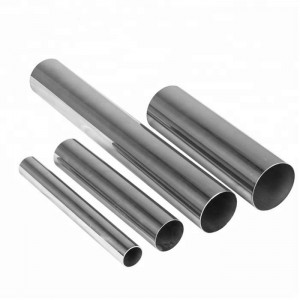
JIS SUH409 stainless steel polishing tube
JIS SUH409 stainless steel polishing tube: Stainless Steel coil products: stainless steel coil tube stainless steel tube coil stainless steel coil tubing stainless steel coil pipe stainless steel coil tube suppliers stainless steel coil tube manufacturers stainless steel pipe coil Specification: Item:stainless steel polishing pipe Type:welded or seamless Standard:ASTM A554 JIS ,DIN Grade:201,202, 304, 304L,316, 316L,409, 430,etc Size:Round pipe:OD 8-219m Square Pipe: OD 10x10mm -150x150mm R...
-
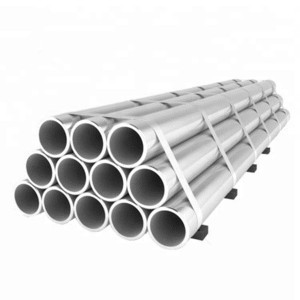
JIS DIN TP 316l Stainless steel Precision pipe
JIS DIN TP316L Stainless steel Precision pipe Stainless steel pipe is one of the more standardized materials in the building and engineering industries. Stainless Steel Seamless Pipes is a hollow steel bar, a large number of pipes used for conveying fluids, such as oil, gas, water, gas, steam,heat exchanger,mechanical machine. Stainless Steel coil products: stainless steel coil tube stainless steel tube coil stainless steel coil tubing stainless steel coil pipe stainless steel coil tube supp...
-
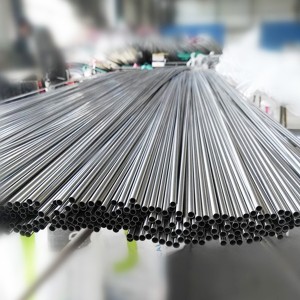
310 stainless steel welded pipe for exhaust pipe
310 stainless steel welded pipe for exhaust pipe stainless steel coil tube stainless steel tube coil stainless steel coil tubing stainless steel coil pipe stainless steel coil tube suppliers stainless steel coil tube manufacturers stainless steel pipe coil Specification: Item:stainless steel welded polishing pipe Type:welded Standard:ASTM A554 JIS ,DIN Grade:201,202, 304,304L,316,316L,409,430,etc Size:Round pipe:OD 8-219m Square Pipe: OD 10x10mm -150x150mm Rectangle Pipe:10x20mm to 120x180mm ...


